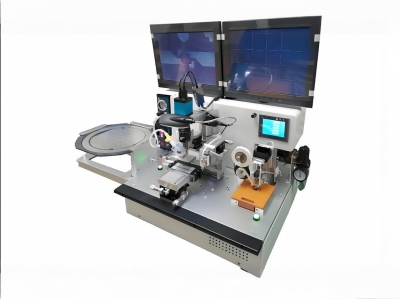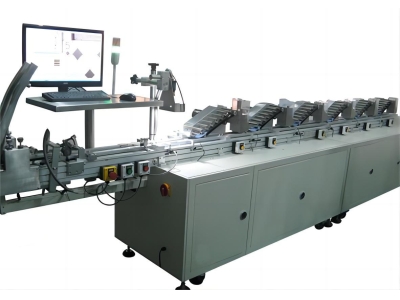
Antenna Embedding & Wire Embedding Machine: RFID Inlay Production Equipment
Every contactless smart card, NFC tag, and RFID inlay depends on an antenna that links the chip to the reader. Producing that antenna reliably is the job of antenna embedding and wire embedding machines. This guide explains how they work, how they differ, and what to compare when buying RFID inlay production equipment.
Why the Antenna Matters
The antenna is the conductive loop that transmits energy and data between the card and the reader at 13.56 MHz (ISO/IEC 14443) or other RFID frequencies. A poorly embedded antenna causes weak read range, inconsistent performance, and field failures. Embedding quality directly determines product yield.
Two Embedding Technologies
| Method | How it works | Best application |
|---|---|---|
| Wire embedding | A copper or aluminum wire is pressed into a groove milled in the card sheet, then fixed with adhesive. | High-performance RFID / NFC inlays, dual-interface cards |
| Antenna embedding (pre-made inlay) | A pre-bonded antenna inlay is positioned and laminated into the sheet. | High-volume standardized inlays, cost-sensitive runs |
How a Wire Embedding Machine Works
- The card sheet is fed and registered precisely.
- A high-speed head dispenses and embeds the antenna wire along a programmed coil path.
- Adhesive locks the wire in the groove.
- Vision inspection verifies coil continuity and position.
- The sheet advances for the next cavity.
ZOWINDA's Wire Embedding Machine performs these steps inline at production scale, with servo-controlled accuracy.
How an Antenna Embedding Machine Works
For pre-made inlays, the Antenna Embedding Machine picks, places, and bonds the inlay into the prepared sheet before lamination. This is faster for standardized antennas and simplifies material logistics.
Key Specifications to Compare
| Parameter | Why it matters |
|---|---|
| Embedding accuracy | Coil position affects read range and yield |
| Cycle speed | Cards or sheets per hour at rated quality |
| Wire diameter range | Flexibility for different antenna designs |
| Vision inspection | Detects broken or misplaced coils early |
| Changeover time | Impact on mixed-SKU production |
Related equipment such as the Automatic Antenna Welding Machine can join wire ends for continuous coils.
Where Antenna Embedding Fits in Production
Embedding sits between lamination prep and module implanting. After the antenna is in place, the sheet is laminated, cut, milled (if dual-interface), and the IC module is implanted. The full sequence is detailed in our RFID Inlay Manufacturing Process article.
Frequently Asked Questions
Wire embedding vs. printed antenna — which is better?
Wire embedding gives the strongest, most consistent RF performance and is preferred for payment and high-security cards. Printed (conductive ink) antennas are cheaper but have higher resistance and shorter range.
Can one machine do both embedding and welding?
Some integrated systems combine embedding, welding, and testing. ZOWINDA offers combined antenna embedding and welding lines for streamlined inlay production.
What read range can I expect?
With proper embedding, typical contactless cards reach 2–10 cm depending on chip, antenna design, and reader power — well within ISO/IEC 14443 requirements.
How do I avoid broken coils?
Use vision inspection, control wire tension, and maintain groove depth consistency. Defect prevention is covered in our Dual-Interface Milling & Embedding guide.
Conclusion: Match the Machine to the Inlay
Choose wire embedding for performance-critical, customized antennas, and antenna embedding (pre-made inlay) for high-volume standardized runs. Both feed directly into lamination and personalization. Explore ZOWINDA antenna and wire embedding equipment or talk to our team for a line design.
Related Reading
- RFID Inlay Manufacturing Process
- RFID vs NFC Card Production
- Dual-Interface Card Milling & Embedding
- IC Module Implanting Machine
ZOWINDA — RFID and smart card production equipment. Email: [email protected] · WhatsApp: +86 186 2085 0485