
Smart Card Slot Milling Machine Guide 2026 | Zowinda
Complete Guide to Smart Card Slot Milling Machines in 2026
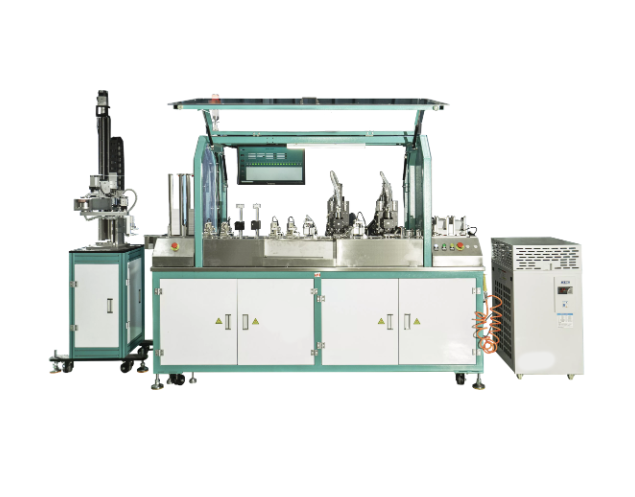
What Is Slot Milling in Smart Card Production?
Slot milling (also called slot punching, cavity milling, or chip recess milling) is the precision machining process that creates a recessed pocket or slot on the surface of a PVC, PET, ABS, or composite card body. This recessed area is designed to hold an integrated circuit (IC) module -- commonly known as a contact chip module or dual-interface module -- which is later implanted during the module embedding stage of production.
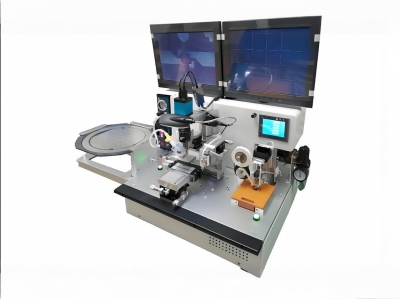
The accuracy of this milling step is paramount. If the slot dimensions deviate by even a fraction of a millimeter, the chip module may not sit flush with the card surface, leading to read failures at terminals, delamination under thermal stress, or outright rejection during quality control. Modern high-speed slot mills like the ZOWINDA3000 Slot Milling Machine achieve positioning tolerances within +/-0.05mm while processing up to 8,500 cards per hour (UPH), making them suitable for large-scale bank card and telecom card production lines.
How Does a Card Slot Milling Machine Work?
A typical automatic slot milling machine operates through the following sequence:
- Card Feeding: Blank or pre-printed card sheets are loaded into a hopper or magazine feeder. Advanced models use vision systems to detect card orientation and ensure correct alignment before processing.
- Positioning & Clamping: Each card is transported to the milling station and secured by vacuum suction or mechanical clamps to prevent any movement during cutting.
- Precision Milling: A high-speed rotary cutter (typically carbide-tipped) mills out the chip cavity according to programmed coordinates. The depth, length, width, and corner radius of the slot are all configurable via the machine's HMI or PC-based control software.
- Dust Extraction: Fine plastic particles generated during milling are immediately removed through a built-in vacuum extraction system. This prevents debris from contaminating the chip cavity or interfering with downstream processes.
- Inspection & Sorting: Post-milling, optical sensors verify that each slot meets dimensional tolerances. Out-of-spec cards are automatically diverted to a reject bin.
This entire cycle typically takes less than 0.5 seconds per card on modern high-speed equipment, enabling throughput rates that were unimaginable just a decade ago. The most advanced models employ servo-driven X-Y positioning tables with closed-loop feedback, ensuring that each cut lands within the specified coordinate window even when the machine is running at maximum speed. Some manufacturers have also introduced tool-wear monitoring systems that track cutter degradation in real time and alert operators before quality thresholds are breached.
Common Slot Milling Defects and How to Prevent Them
Even with well-engineered equipment, slot milling can produce defects if process parameters drift or maintenance is neglected. Understanding the root causes helps you maintain consistent output:
- Oversized or Undersized Slots: Usually caused by cutter wear, incorrect feed rate, or temperature-induced thermal expansion of the positioning system. Solution: implement a scheduled cutter replacement protocol based on actual cut count rather than calendar time; perform daily dimensional checks using a go/no-go gauge on a sample of milled cards.
- Rough Slot Edges or Burr Formation: Occurs when the cutter becomes dull or the spindle RPM drops below optimal range. Rough edges interfere with adhesive bonding during module embedding. Solution: monitor spindle motor current draw as an early indicator of cutting resistance; keep spare sharpened cutters ready for immediate swap.
- Slot Position Drift: The cavity shifts relative to the card edge over time due to mechanical backlash or loose fixture clamps. Even 0.2mm of drift can cause modules to overlap printed areas or extend beyond the card boundary. Solution: use machines with linear guide rails instead of plain bearings; recalibrate origin points weekly using a vision alignment reference.
- Dust Residue in Cavity: Inadequate vacuum extraction leaves fine plastic particles inside the slot, preventing proper module seating. This is one of the most common causes of field failures in finished cards. Solution: inspect and clean vacuum filters daily; verify suction pressure at the milling head before each shift start.
Key Technical Specifications for Slot Milling Machines
When evaluating slot milling equipment for your production line, pay close attention to these critical parameters:
| Parameter | Specification | Why It Matters |
|---|---|---|
| Throughput (UPH) | 5,000 - 8,500 UPH | Determines daily output capacity |
| Milling Accuracy | +/- 0.03 - 0.08 mm | Directly affects chip fitment quality |
| Cutter Life | 80,000 - 150,000 cuts | Impacts consumables cost per card |
| Supported Card Types | ISO 7810 ID-1 / CR80 | Must match standard card dimensions |
| Slot Configurations | EMV, GSM, ID, Custom | Flexibility for different chip formats |
| Dust Collection | Built-in vacuum + filter | Prevents contamination & rework |
| Control Interface | Touchscreen HMI / PLC | Ease of operation & parameter change |
| Power Supply | 220V AC / 50-60Hz, ~1.5kW | Standard industrial power requirement |
Where Slot Milling Fits Into the Full Production Line
Slot milling does not operate in isolation. It occupies a specific position within the end-to-end smart card manufacturing sequence:
| Stage | Process | Typical Equipment |
|---|---|---|
| 1 | Card Sheet Printing | Offset / Digital Printers |
| 2 | Lamination | Card Laminators |
| 3 | SLOT MILLING (this article) | Slot Milling Machines |
| 4 | Module Embedding | Module Implanters |
| 5 | Personalization (Data) | Card Personalizers |
| 6 | Quality Testing | Three Wheel Testers, Electrical Testers |
| 7 | Packaging & Mailing | Card Mailers / Packaging Lines |
As shown above, slot milling sits between lamination and module embedding. A poorly calibrated miller will create problems that cascade downstream: misaligned slots cause module placement errors at Stage 4, which then lead to electrical contact failures detected at Stage 6. This interdependency makes it essential to treat slot milling as a bottleneck-critical process that demands reliable, well-maintained equipment. Many card producers run two parallel slot milling lines with automatic load balancing so that if one machine goes down for maintenance, the other can absorb the throughput without stopping the entire line. This redundancy strategy is especially important for facilities that operate under strict delivery deadlines from bank or government contracts.
Industry Trends Shaping Slot Milling in 2026
The smart card manufacturing landscape is evolving rapidly, and slot milling technology is keeping pace with several notable trends:
- Sustainable Materials: As banks and governments mandate recycled and bio-based card substrates (rPET-G, PLA blends), slot milling cutters and feed parameters must be re-optimized for materials with different hardness and thermal properties than traditional PVC.
- Industry 4.0 Integration: Leading manufacturers now offer IoT-enabled millers that report uptime, cutter status, and quality metrics to central MES (Manufacturing Execution System) dashboards in real time. Predictive maintenance algorithms can forecast cutter replacement needs before failure occurs.
- Smaller Chip Modules: The ongoing miniaturization of IC modules means smaller cavity dimensions with tighter tolerances. Some next-generation contact chips require slots under 12mm in length with corner radii below 0.3mm -- specifications that were considered at the edge of feasibility just five years ago.
- Hybrid Card Production: Cards that combine magnetic stripes, contact chips, and NFC antennas in a single body are becoming standard in many markets. This requires slot mills that can produce multi-zone cavities (contact area plus antenna recess) in a single pass without compromising positional accuracy.
Buyer's Checklist: Selecting a Slot Milling Machine
Before making a purchasing decision, work through this checklist with your shortlisted suppliers:
- Daily Volume Requirement: Calculate your peak output need and add a 20% safety margin. If you need 150,000 milled cards/day, look for machines rated at 7,000+ UPH to run one shift.
- Card Material Compatibility: Confirm the miller supports your specific substrate -- standard PVC, recycled PET-G, polycarbonate, or hybrid materials. Some cutters wear faster on harder materials.
- Slot Template Flexibility: Can you store multiple slot profiles (EMV, ISO, custom) and switch between them without hardware changes? This is vital if you serve diverse markets.
- Changeover Time: How long does it take to swap between different slot configurations? Under 10 minutes is ideal for mixed-production environments.
- Maintenance & Consumables Cost: Ask for cutter replacement cost, expected tool life, and whether spare parts are stocked locally. A low purchase price with expensive consumables can exceed a higher-priced competitor over 3 years.
- After-Sales Support: Does the manufacturer provide remote diagnostics, on-site service, and training? Downtime on a bottleneck station costs thousands per hour.
Frequently Asked Questions
Q1: What is the difference between slot milling and punch cutting for smart cards?
Slot milling uses a rotating cutter to remove material gradually, producing clean edges and precise depths ideal for contact chip cavities. Punch cutting uses a shaped die to stamp the shape in one stroke, which is faster but less accurate for complex profiles. For EMV-compliant banking cards where chip recess dimensions are strictly specified, slot milling is the industry-standard method.
Q2: Can a slot milling machine handle dual-interface (contact + NFC) cards?
Yes. Dual-interface cards require a larger cavity to accommodate both the contact pad area and the antenna connection zone. Most modern slot milling machines support programmable slot dimensions and can be configured for dual-interface profiles. The key consideration is ensuring the miller has sufficient travel range and cutter geometry for wider slots.
Q3: How often do milling cutters need replacement?
Carbide cutters typically last between 80,000 and 150,000 cuts depending on material hardness, cutting depth, and feed rate. On an 8,500 UPH machine running two shifts, that translates to roughly every 5-10 days. Many manufacturers offer diamond-coated or PVD-coated cutters that extend life by 30-50%, though at a higher unit cost.
Q4: What is the typical ROI period for a slot milling machine investment?
For mid-to-high volume producers (above 100,000 cards/month), the ROI typically falls between 18 and 36 months. The calculation factors in labor savings versus manual methods, reduced rejection rates from improved consistency, increased throughput capacity, and lower maintenance costs compared to older equipment. Request a detailed cost-per-card analysis from your supplier that includes consumables and scheduled maintenance.
Q5: Do I need a separate slot miller for different card sizes (ID-1, ID-00)?
Not necessarily. Many modern slot milling machines feature adjustable fixtures that accept ISO 7810 ID-1 (credit card size) as well as smaller form factors like ID-00 (mini SIM) with simple fixture swaps. Confirm multi-format capability during your supplier evaluation, especially if you produce SIM cards alongside banking credentials.
Ready to Upgrade Your Card Production Line?
Zowinda offers a comprehensive range of smart card manufacturing equipment including high-speed slot milling machines, card personalization systems, and reliability testing equipment. Contact our team for technical consultation, pricing, or a factory visit.
Email: [email protected] | WhatsApp: +86 186 2085 0485
 How to Set Up a Smart Card Pro
 Antenna Embedding & Wire E
 Smart Card Manufacturing Proce
 RFID Inlay Sample Bonding Mach
Please contact us with your request
We are ready to answer your questions.