
Card Sorter Buyer's Guide: 3,000 vs 8,000 CPH
Card Sorter Buyer's Guide: 3,000 vs 8,000 CPH
Card sorting is the last step before a finished product reaches the customer. Whether you are mailing personalized bank cards, sorting government IDs, or packing SIM cards, the sorter determines how fast you can ship and how many errors make it out the door. Buyers often shop by headline speed, but the real decision depends on the item type, the upstream machine, and the routing complexity you need. This buyer's guide compares 3,000, 6,000, and 8,000 cards-per-hour (CPH) sorting systems, explains the two dominant architectures, and shows how to size a sorter for your operation.
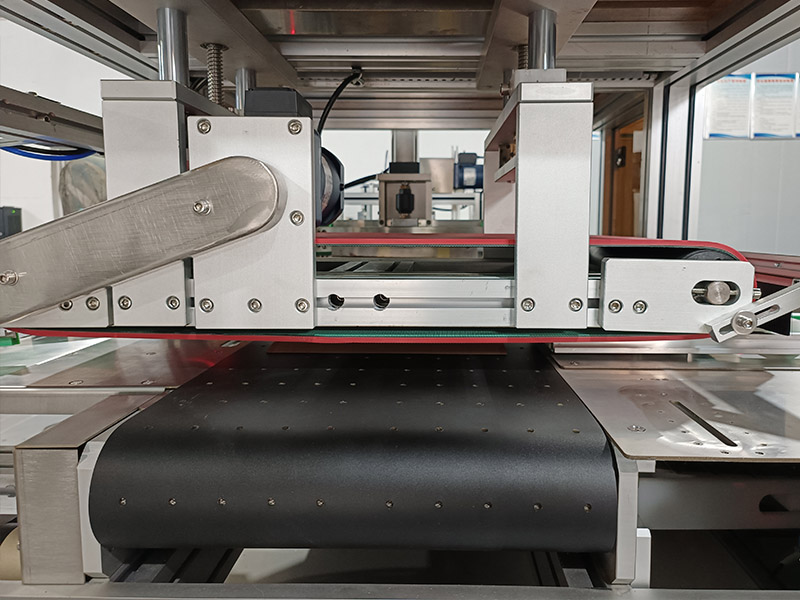
Why Sorting Is the Final Quality Gate
Upstream equipment embeds chips, prints data, and applies overlays. The sorter takes the finished card and puts it in the right bin, envelope, or packaging lane. A sorter that is too slow creates a bottleneck. A sorter that is too simple may misroute cards or fail to reject bad ones. The right system balances speed, accuracy, and routing flexibility for your specific mix.
The two questions every buyer should answer before comparing machines are:
- What is my upstream sustained output? The sorter should run at least 15–20% faster than the machine feeding it to absorb peaks.
- How many destinations do I need? Simple operations may need 5–10 bins. Complex mailing or fulfillment workflows may need 30 or more.
Cross-Belt vs Diverging (Z-Type) Sorting
Card sorting machines fall into two main mechanical families. Each has a clear sweet spot.
| Dimension | Cross-Belt Sorter | Diverging (Z-Type) Sorter |
|---|---|---|
| Typical throughput | 8,000–10,000 items/hour | 3,000–6,000 items/hour |
| Layout | Loop or long linear belt with carrier trays | Compact linear conveyor with diverts |
| Best for | High-volume flat cards, envelopes, mail | Mixed-size envelopes, documents, flexible items |
| Changeover speed | Moderate | Fast |
| Footprint | Larger | Smaller |
| Accuracy | Very high | High |
For a card personalization line producing 6,000–8,000 cards per hour, a cross-belt sorter is usually the safe choice. For a mail center handling many envelope sizes with frequent job changes, a diverging Z-type sorter is often more practical.
Throughput Levels: 3,000, 6,000, and 8,000 CPH
3,000 CPH Sorters
Entry-level machines for small card bureaus, government ID pilot programs, or low-volume telecom operations. These are often compact Z-type diverging sorters with 5–10 divert destinations and simple barcode reading. They are a good fit when:
- Upstream output is under 2,500 cards per hour.
- The product mix changes frequently.
- Floor space is limited.
6,000 CPH Sorters
The mid-range workhorse for medium card bureaus, bank card fulfillment, and regional ID centers. A 6,000 CPH sorter can keep pace with most personalization lines and still offers enough divert points for typical mailing workflows. This is often the point where buyers start comparing cross-belt and Z-type designs seriously.
8,000+ CPH Sorters
High-volume cross-belt systems designed for large personalization centers, bank card mailers, and national ID programs. They offer the highest throughput, multiple reading methods, and the ability to handle both cards and envelopes. The trade-off is a larger footprint and higher investment. Use this class when:
- Upstream output is consistently above 6,000 CPH.
- You run long production campaigns with fewer changeovers.
- Accuracy and traceability are audited by customers or regulators.
What to Look for in a Card Sorter
- Reading technology — barcode, 2D code, OCR, or vision. Match the reader to the data format on your cards.
- Divert accuracy — 99.9%+ is standard for high-end systems; ask for reject handling rates too.
- Reject lane — automatic separation of unread, misread, or damaged items prevents bad product from shipping.
- Integration — the sorter should accept data from the upstream personalization machine and report results back to the host system.
- Changeover time — measured in minutes; this matters when you run many small jobs per shift.
- Footprint and power — make sure the machine fits your floor layout and electrical service.
ZOWINDA Sorting Equipment
ZOWINDA offers sorting and mailing systems across the throughput range, with integrated sealing and labeling where needed:
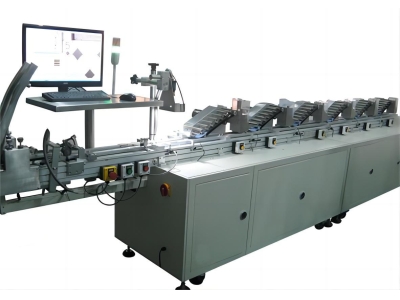
- Automated Card Sealing Labeling Sorting Machine — high-volume card mailing with sealing, labeling, and sorting in one line.
- Auto Envelope Sealing and Labeling Machine — handles envelope closing, label application, and routing for mailing operations.
- Efficient and Customizable Envelope Sorting Machine — flexible Z-type design for mixed mail and envelope formats.
- Intelligent Envelope Sorting System — vision-guided routing with high accuracy and automatic reject handling.
Choosing the right model starts with your upstream machine speed and the number of destinations your workflow needs. A 6,000 CPH line feeding an 8,000 CPH sorter gives healthy headroom for peaks and rejects without over-investing.
Frequently Asked Questions
Should I size the sorter to my average or peak output?
Size to your peak sustained output plus 15–20% headroom. A sorter that runs at its absolute maximum all day leaves no margin for rejects, rework, or upstream jams.
Can one sorter handle both cards and envelopes?
Cross-belt sorters generally handle flat cards and envelopes well. Z-type diverging sorters are often better for flexible, mixed-format envelopes. If you need to run both on the same line, choose a system with adjustable guides and proven tooling for both item types.
How important is the reading method?
Very. The reader must match the data format on your cards. OCR is flexible but slower. Barcode is fast and cheap. Vision is the most flexible and accurate but adds cost. Pick the simplest method that works for your data.
What is the real difference between 3,000 and 8,000 CPH?
At 3,000 CPH a machine produces one item every 1.2 seconds. At 8,000 CPH it produces one every 0.45 seconds. The difference is not just speed; it is the mechanical design, reading, divert technology, and integration needed to maintain accuracy at that pace.
Conclusion: Buy the Throughput Your Workflow Needs
There is no universal "best" card sorter. A 3,000 CPH Z-type sorter is the right answer for a small bureau with frequent changeovers. An 8,000 CPH cross-belt system is the right answer for a national bank card personalization center. The key is to match the sorter's speed, architecture, and routing capacity to your actual production mix and upstream output.
Not sure which sorter fits your card personalization line? Browse ZOWINDA card sorting and mailing systems or reach out at [email protected] / WhatsApp +86 186 2085 0485 for a throughput sizing review.
 Antenna Embedding & Wire E
 Smart Card Manufacturing Proce
 RFID Inlay Sample Bonding Mach
 Poker Sorting Machine: High-Sp
Please contact us with your request
We are ready to answer your questions.