
RFID vs NFC Card Production: Equipment Differences
RFID vs NFC Card Production: Equipment Differences
RFID and NFC cards are everywhere in access control, transit, payment, and supply chain tracking. The two terms are often used interchangeably, but from a production standpoint they are not identical. Understanding the differences helps you choose the right equipment, avoid over-engineering, and deliver cards that match the customer's specification. This guide compares RFID and NFC card production, the inlay processes behind each, and the machines that make them.
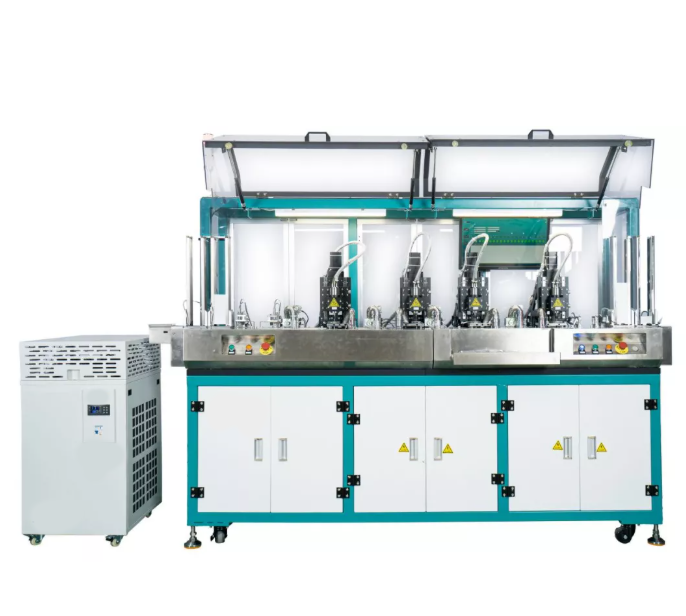
What Is the Difference Between RFID and NFC?
RFID is a broad family of radio-frequency identification technologies. It covers many frequencies, form factors, and protocols. NFC is a specific subset of RFID that operates at 13.56 MHz and follows ISO/IEC 14443 or NFC Forum standards. In practical terms:
- RFID includes low-frequency (125 kHz), high-frequency (13.56 MHz), and ultra-high-frequency (UHF, 860–960 MHz) tags and cards.
- NFC is a high-frequency protocol designed for short-range communication, typically between a card and a smartphone or reader.
- Every NFC card is an RFID card, but not every RFID card is NFC-compatible.
For a card manufacturer, the production line is mostly the same for HF RFID and NFC. The main differences are antenna design, chip selection, and the final testing protocol.
The RFID Inlay Production Process
An RFID inlay is the functional heart of the card. It consists of a chip and an antenna mounted on a thin substrate. The production process includes:
- Antenna creation — etching, printing, or wire embedding.
- Chip attachment — flip-chip bonding or conductive adhesive placement.
- Encapsulation / lamination — protecting the chip and antenna between overlay films.
- Frequency and electrical testing — verifying the inlay meets the target specification.
For high-volume NFC cards, an Auto Contactless Card Inlay Line automates the entire antenna-to-substrate and chip-bonding sequence. For flexible antenna designs, a Auto Wire Embedding Machine (2-in-1 System) lays and embeds copper wire with high precision.
The NFC Card Production Process
NFC cards start from the same HF RFID inlay. The additional work comes from ensuring the card meets the NFC Forum and ISO/IEC 14443 Type A / Type B requirements. The production flow includes:
- Antenna tuning — the antenna must be tuned to 13.56 MHz with the target chip and card body.
- Lamination — the inlay is laminated into a card body, often with printed overlays.
- Personalization — data, keys, and applications are loaded onto the chip.
- Functional testing — verifying read range, communication speed, and protocol compliance.
The tuning step is especially important for NFC because smartphones are less forgiving than dedicated industrial readers. A slight shift in resonance can cause a phone to fail to read the card while a fixed reader still works. An Automatic Frequency Test Machine helps catch these issues before cards ship.
Equipment Comparison: RFID vs NFC Card Lines
| Equipment | RFID Production | NFC Production |
|---|---|---|
| Antenna embedding | Etching, printing, wire embedding, or lamination | Wire embedding or etched antenna tuned to 13.56 MHz |
| Chip bonding | Flip-chip or pick-and-place | Flip-chip, often HF-specific chips |
| Lamination | Standard card lamination | Standard lamination with tight thickness control |
| Frequency test | Required for HF/UHF tuning | Critical for 13.56 MHz phone compatibility |
| Final test | Read range and electrical test | Protocol compliance + read range + speed |
| Personalization | Depends on application | Often requires NFC application loading |
The table shows that the equipment is mostly shared. The real difference is in the setup, testing, and chip selection, not the machinery itself.
Key Equipment Choices
For manufacturers building or expanding a contactless card line, the following equipment covers the most common requirements:
- Integrated Inlay Manufacturing System — an all-in-one line for embedding, bonding, and consolidating inlays.
- Auto Wire Embedding Machine (2-in-1 System) — precise wire laying and embedding for HF and NFC inlays.
- Automatic 3D Curved Antenna Embedding Machine — for non-flat cards, wearables, and specialty tags.
- Auto Contactless Card Inlay Line — complete inlay production for standard contactless cards.
- Automatic Frequency Test Machine — verifies 13.56 MHz tuning and NFC compatibility.
- Automatic Module Testing Machine — tests electrical performance and communication of finished modules.
Use Cases and Market Differences
RFID is the broader market. It serves logistics, access control, animal tracking, industrial tagging, and many other applications where the read range can be a few centimeters or many meters. UHF RFID is common in supply chains because it reads at a distance. LF RFID is common in access cards because it is simple and reliable.
NFC is a consumer-facing market. It powers contactless payment, transit cards, mobile wallet pairing, and smart posters. NFC cards must communicate reliably with smartphones, which means tight tuning and protocol compliance. The volumes are often large, but the cards are usually single-frequency 13.56 MHz devices.
Frequently Asked Questions
Can the same machine make RFID and NFC cards?
Yes. Most HF RFID and NFC inlay production uses the same antenna embedding, chip bonding, and lamination equipment. The difference is in antenna design, chip selection, and testing parameters.
Do I need separate frequency testers for RFID and NFC?
A good frequency tester can be configured for multiple bands and protocols. For NFC work, make sure the tester supports 13.56 MHz and ISO/IEC 14443.
Which is harder to produce: RFID or NFC cards?
NFC cards are generally more demanding because they must work with consumer phones and meet stricter protocol requirements. RFID cards for closed-loop industrial systems can tolerate more variation.
What determines NFC read range?
The antenna size, chip tuning, card body thickness, and lamination pressure all affect read range. A well-tuned inlay in a standard card body gives a few centimeters of reliable phone read distance.
Conclusion: Focus on the Specification, Not Just the Label
RFID and NFC cards are produced on similar lines, but the specification matters. NFC demands tighter tuning and protocol compliance. RFID spans more frequencies and applications. The right equipment is the same machinery configured for the correct antenna, chip, and test setup. For manufacturers, the biggest win is choosing machines that can switch between HF RFID and NFC production with minimal changeover.
Building an RFID or NFC card line? Explore ZOWINDA inlay and testing equipment or contact us at [email protected] / WhatsApp +86 186 2085 0485 for a process review.
 How to Set Up a Smart Card Pro
 Antenna Embedding & Wire E
 Smart Card Manufacturing Proce
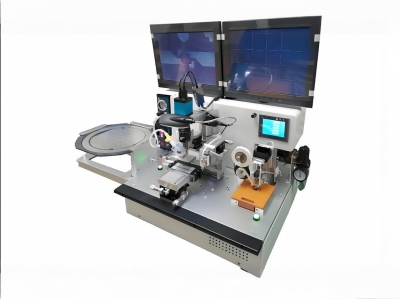 RFID Inlay Sample Bonding Mach
Please contact us with your request
We are ready to answer your questions.