
Automatic 3D Curved Antenna Embedding Machine

Product Overview
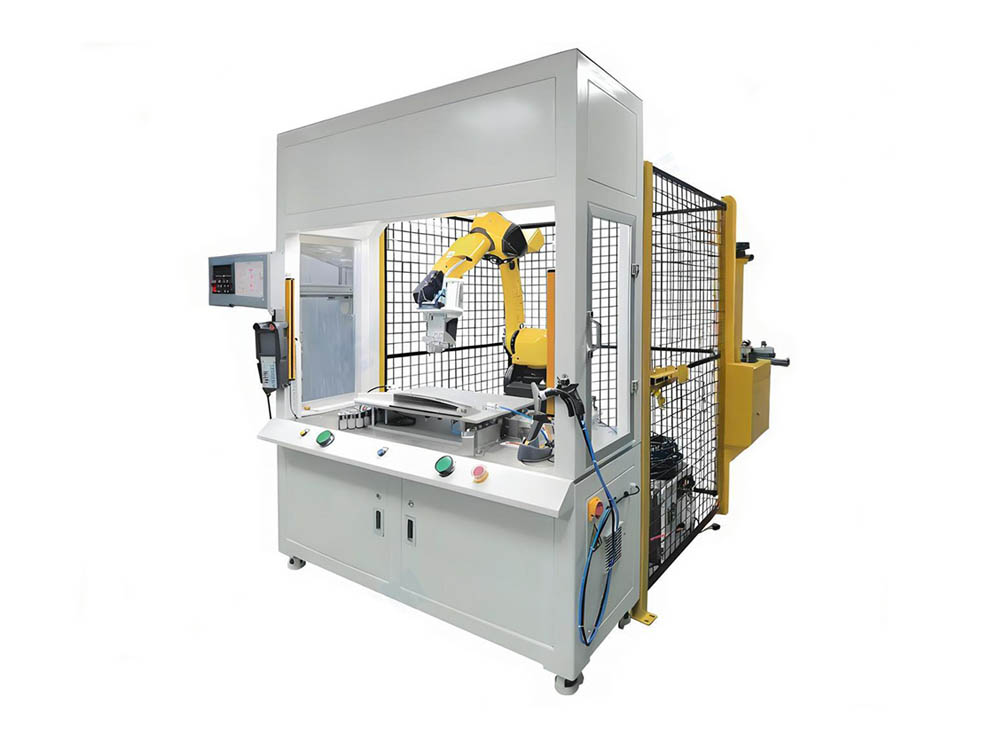
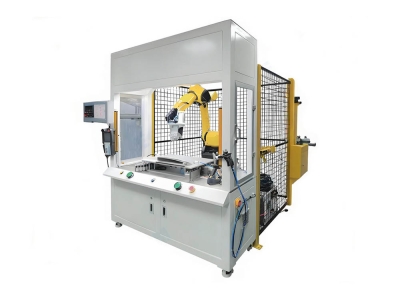
The LDT-WTD-60 Automatic 3D Curved Antenna Embedding Machine is an advanced, robot-driven automation system designed for the precise embedding of resistance wire onto PVC and other polymer substrates. Unlike conventional wire embedders limited to flat surfaces, the LDT-WTD-60 utilizes a high-precision industrial robot capable of embedding wire on planar, curved, and spherical surfaces with exceptional accuracy.
Engineered for manufacturers of smart cards, RFID antennas, automotive components, wearable devices, and IoT products, this machine combines PLC-controlled automation, real-time monitoring, and advanced ultrasonic embedding technology to deliver consistent, high-quality results across complex three-dimensional geometries.
Key Advantages
3D Surface Capability – Embeds wire on planar, curved, and spherical surfaces with ±0.02 mm robot accuracy.
One-Button Automation – PLC-controlled, one-button start simplifies operation and reduces training time.
Real-Time Monitoring – Displays robot speed, coordinates, material codes, and tension values on the screen via PLC.
Ultrasonic Embedding Technology – Program-controlled, stable, and reliable wire embedding process.
Comprehensive Safety – Equipped with safety light grid protection for operator safety.
Remote Connectivity – Internet-enabled for remote diagnostics and maintenance.
Key Features
1. High-Precision 3D Robotic Operation
The LDT-WTD-60 employs a high-precision industrial robot capable of embedding wire on complex three-dimensional surfaces. With a robot accuracy of ±0.02 mm, the machine ensures consistent antenna placement regardless of substrate geometry—whether flat, curved, or spherical.
| Surface Type | Application Example |
|---|---|
| Planar | Standard smart card inlays, RFID tags |
| Curved | Automotive key fobs, wearable devices |
| Spherical | 3D antennas for IoT sensors, medical devices |
2. PLC Automatic Control with One-Button Start
The machine is controlled by a user-friendly PLC system. Operators can start the wire embedding process with a single button, minimizing setup time and reducing the potential for operator error.
3. Real-Time Data Monitoring
All critical production parameters are displayed on the screen, including:
Robot speed
Coordinate positions
Material code
Wire tension values
This real-time visibility allows operators to monitor process stability and quickly identify any anomalies.
4. Ultrasonic Wire Embedding Technology
The system utilizes advanced ultrasonic wire embedding, which provides:
Stronger adhesion – Ultrasonic energy bonds wire to the substrate without damaging materials
Consistent results – Program-controlled operation ensures repeatable quality
Material compatibility – Works with PVC, ABS, and other polymer substrates
5. Honeycomb Membrane with Real-Time Suction Monitoring
The worktable features a honeycomb-designed membrane with real-time suction monitoring. This ensures that the product remains firmly adhered to the membrane during the embedding process, preventing movement that could compromise accuracy.
6. Integrated Wire Breakage & Tension Detection
The machine continuously monitors wire condition during operation:
Wire breakage detection – Instantly stops the machine if wire breaks, preventing defective production
Tension detection – Monitors wire tension in real-time to ensure consistent embedding quality
7. Material Mixing Prevention (Scanning Function)
An integrated scanning function prevents material mix-ups by verifying material codes before processing. This is particularly valuable in high-mix production environments where different antenna designs are processed on the same machine.
8. Remote Diagnostics and Maintenance
The LDT-WTD-60 can connect to the internet, enabling remote diagnostics and maintenance. This feature reduces downtime by allowing technical support teams to troubleshoot issues without an on-site visit.
9. Operator Safety Features
Safety light grid protection – Stops machine operation if the safety zone is breached
One-button start – Reduces operator exposure to moving parts during setup
Technical Specifications
| Parameter | Specification |
|---|---|
| Model | LDT-WTD-60 |
| Dimensions (L×W×H) | 1,700 × 1,920 × 2,300 mm |
| Weight | 800 kg |
| Power Supply | AC 220V, 50/60 Hz |
| Power Consumption | 1.5 kW |
| Air Pressure Requirement | 0.6 MPa |
| Robot Accuracy | ±0.02 mm |
| Cycle Time | 60 seconds/unit (antenna length and process dependent) |
| Applicable Materials | PVC, ABS, and similar polymers |
| Operating Environment | 22°C ±3°C, dry, dust-free |
| Control System | PLC with robotic integration |
| Embedding Technology | Ultrasonic |
| Special Features | Wire break detection, tension monitoring, remote diagnostics, safety light grid |
Applications
The LDT-WTD-60 is ideal for manufacturers producing antennas and wire-embedded components for:
Smart Cards – Contactless payment cards, dual-interface cards
RFID & NFC Tags – Inventory tracking, access control, asset management
Automotive Electronics – Keyless entry antennas, tire pressure monitoring sensors
Wearable Devices – Smartwatches, fitness trackers, medical monitoring bands
IoT Sensors – Connected devices requiring embedded antennas
Medical Devices – Implantable and wearable monitoring equipment
Aerospace & Defense – Conformal antennas for aircraft and military applications
Why Choose the LDT-WTD-60?
| Challenge | LDT-WTD-60 Solution |
|---|---|
| Traditional wire embedders only work on flat surfaces | ±0.02 mm precision robot embeds on curved and spherical surfaces |
| Manual wire embedding is slow and inconsistent | One-button PLC automation with ultrasonic technology ensures repeatable quality |
| Wire breaks cause production defects without warning | Real-time wire breakage detection immediately stops the machine |
| Material mix-ups lead to scrap and rework | Scanning function verifies material codes before processing |
| Downtime for maintenance is costly | Remote diagnostics enable fast troubleshooting without on-site visits |
| Operator safety is a concern | Safety light grid protection stops the machine if the safety zone is breached |
Customer Benefits
Expand Production Capabilities – Embed antennas on complex 3D surfaces previously impossible with flat-bed embedders.
Reduce Scrap and Rework – Real-time wire breakage and tension detection prevent defective production.
Lower Labor Costs – One-button start and PLC automation reduce operator intervention.
Minimize Downtime – Remote diagnostics allow technical support to resolve issues quickly.
Improve Operator Safety – Safety light grid and automated operation reduce accident risks.
Ensure Material Traceability – Scanning function prevents costly material mix-ups.
Conclusion
The LDT-WTD-60 Automatic 3D Curved Antenna Embedding Machine represents a significant advancement in antenna manufacturing technology. By combining high-precision robotics, ultrasonic embedding, and intelligent monitoring systems, it enables manufacturers to produce antennas on planar, curved, and spherical surfaces with ±0.02 mm accuracy and 60-second cycle times.
Whether you are producing smart card inlays, automotive antennas, or wearable device components, the LDT-WTD-60 delivers the precision, reliability, and flexibility required to meet the demands of next-generation connected products.
Q: What is special about this machine?
A: It automatically embeds 3D curved antennas for smart passports,异形 cards, and other special products with high precision.
Q: Which antenna types are supported?
A: Supports copper wire, aluminum wire, and conductive ink. Capable of creating complex shapes.
Q: What is the embedding accuracy?
A: Achieves ±0.1mm accuracy, ensuring precise antenna placement.
Q: What is the curved radius range?
A: Supports curved radii from R5mm to R100mm.
Q: How efficient is the production?
A: Produces 500–1,000 antennas per hour, depending on design complexity.
Q: Are molds required for operation?
A: No. It uses CNC-controlled programming to define antenna shapes, eliminating the need for physical molds.
Q: How is material waste controlled?
A: Precise wire length control ensures a waste rate of less than 2%.
Q: Can the machine detect antenna defects?
A: Yes. Online inspection systems automatically detect breaks or shorts in the antenna.
Q: Is the operation difficult?
A: While it requires training, the program-controlled operation significantly reduces manual difficulty.
Q: What are the main applications?
A: Ideal for smart passports, e-passports,异形 RFID cards, and wearable devices.
Related PRODUCTS
-
Auto Patch Pick and Place Machine
-
Auto Sheet Trimming Machine - High-Preci
-
Auto Contactless Card Inlay Sheet Manufa
-
Automatic Milling & Implanting Machi
-
Automatic IC Module Implanting Machine
-
Auto Envelope Sealing and Labeling Machi
-
Automatic Module Testing Machine
-
Automatic 3D Curved Antenna Embedding Ma
-
Automatic Frequency Test Machine
-

Auto Wire Embedding Machine (2-in-1 Syst