
Automatic Milling & Implanting Machine
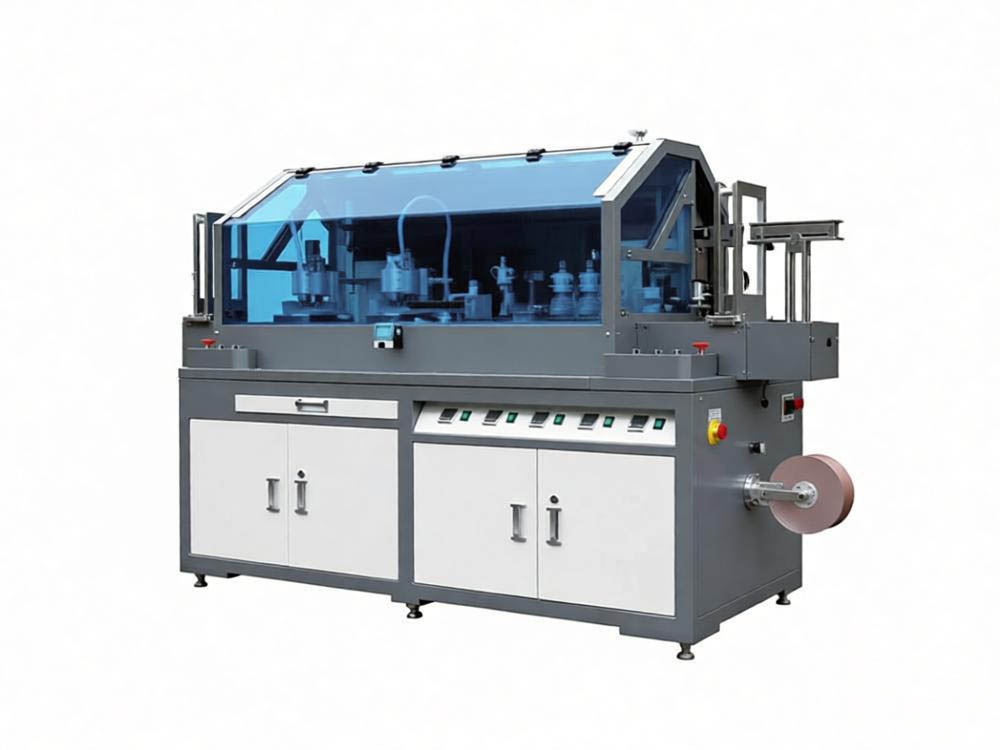
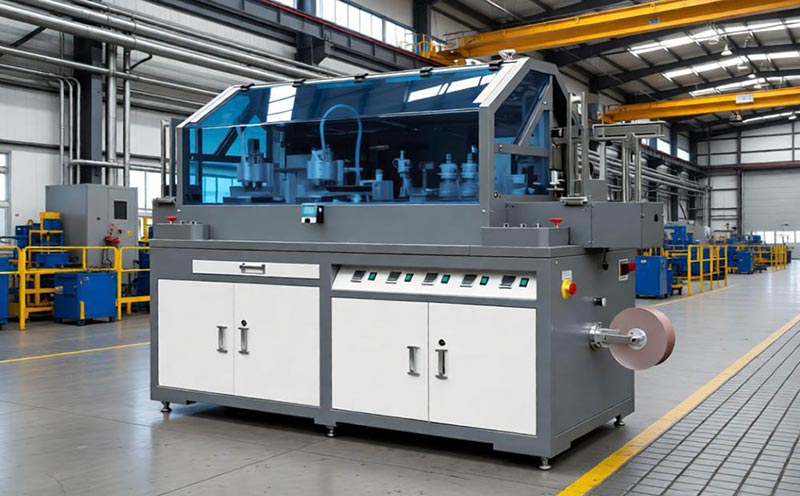

Overview
This system is based on vision inspection principle, which integrates optics, electro mechanics and computer software technologies.
It is a fully automatic plastic/smart card visual inspection system developed for the standard card appearance quality detection and OCR (optical character recognition) specifically.
According to the technology, it’s composed of several modules. Each module has its special function. These functions work in one machine ensures the security, stability, accuracy and c
onvenience of defect inspection and identify of characters in printing on both sides of the cards.
WJ-18000 Auto card vision inspection system has been widely using in card manufacturer in recent years, can increase management; keep card quality standard in high level instead of manually working. Meanwhile, reduced factory labor cost enormously!
Application
SIM/Banking Card Manufacturer
Plastic Card/Tag Manufacturer
Cards Personalization Bureau
Inspection Item (Typical)
Ink spots
Air bubbles
Missing letters
Scratches on surfaces
Laminated scratches
Lamination dirty spots
Blebs and enclosures
Signature position
magnetic stripe position
hologram position and defects
Partial missing of lamination foil, holes in the lamination foil
Technical Parameters
Working Speed (Typical) :
18,000 UPH (the final speed depends on inspection items and requirements)
Operation environment:
Temperature: 5~40℃
Humidity: 15~90%
Storage temperature: -10~60℃
Air Supply:
Air pressure: 0.45-1 MPA
Air flow: no less than 20L/min
Quick connector for air tube is required in the vicinity of machine installation site, and the distance between the connective location and the machine shall be less than 3.5 meters.
Electric Requirement :
Grounding resistance: <10Ω
Power supply: 220V±10%,48~62Hz
The standard 220V AC power source shall be supplied for this system, and the reliable third kind of protective earthling is required.
The total power is about 1.6KW,and an independent power outlet is required —— Using the standard triple power outlet whose distance to the machine is less than 1.5m and admitting that the electric current of the outlet and the circuit is more than 10A.
External Dimension :
Mainframe: 2540(L)*710(W)*1500(H) •
Issuing part: 1400(L)*710(W)*1500(H) •
Collecting part: 1500(L)*710(W)*1500(H) (the issuing part and the collection part can be adjusted referring to the requests)Full Auto Card Surface Detection Machine (Detection Module)
Full Auto Card Surface Detection Machine (Detection Module) External Detection Module Introduction
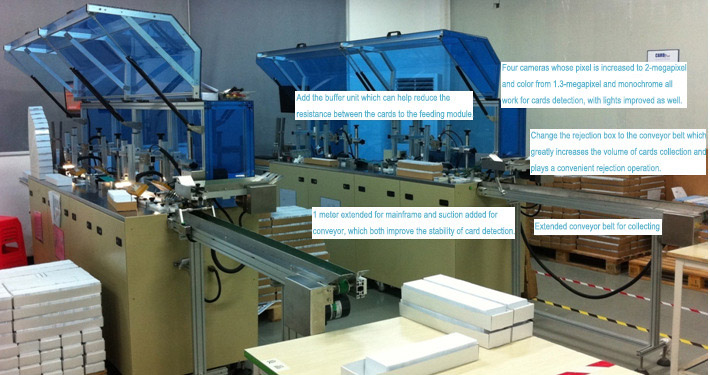
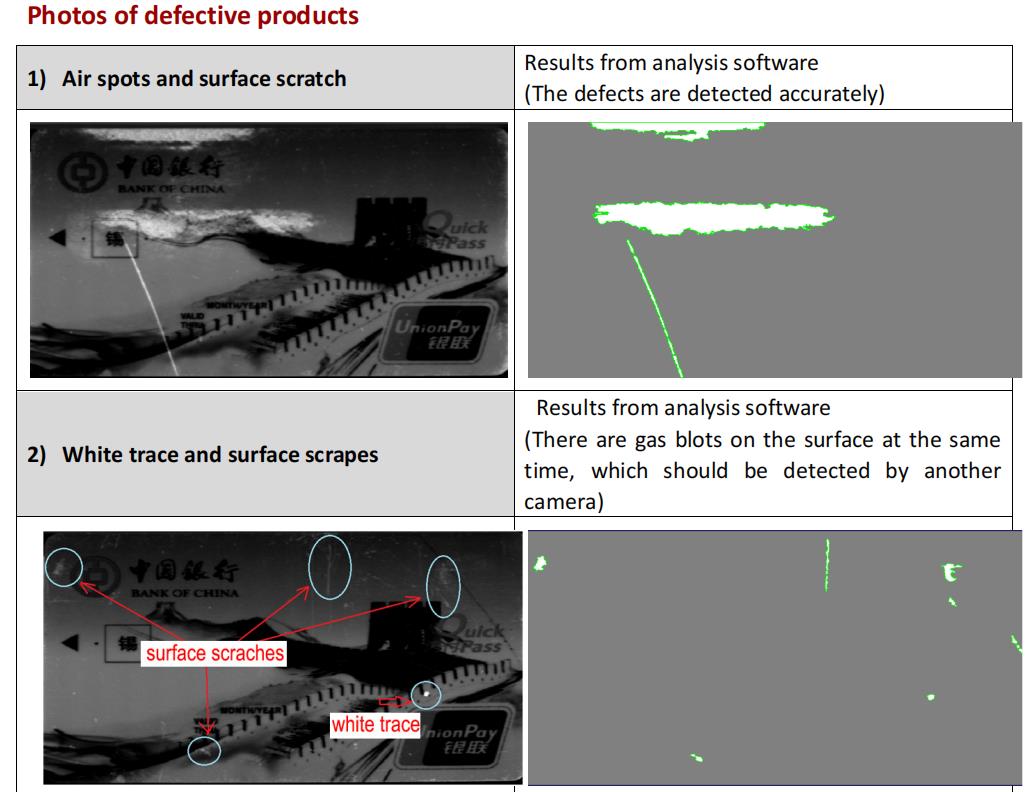
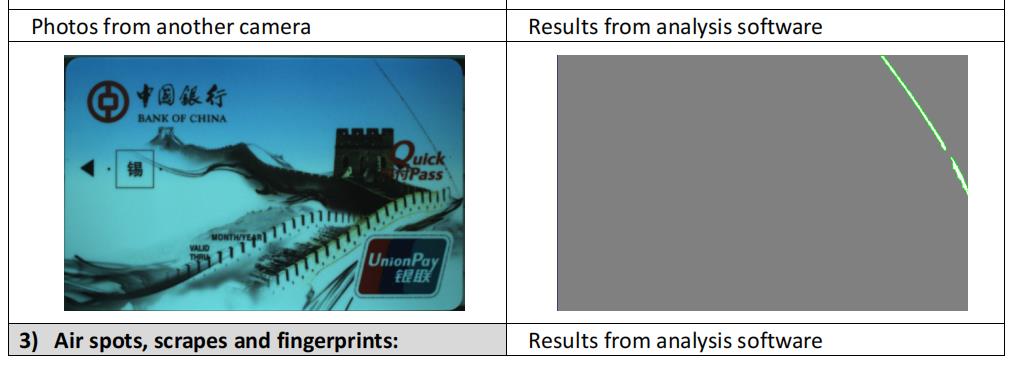
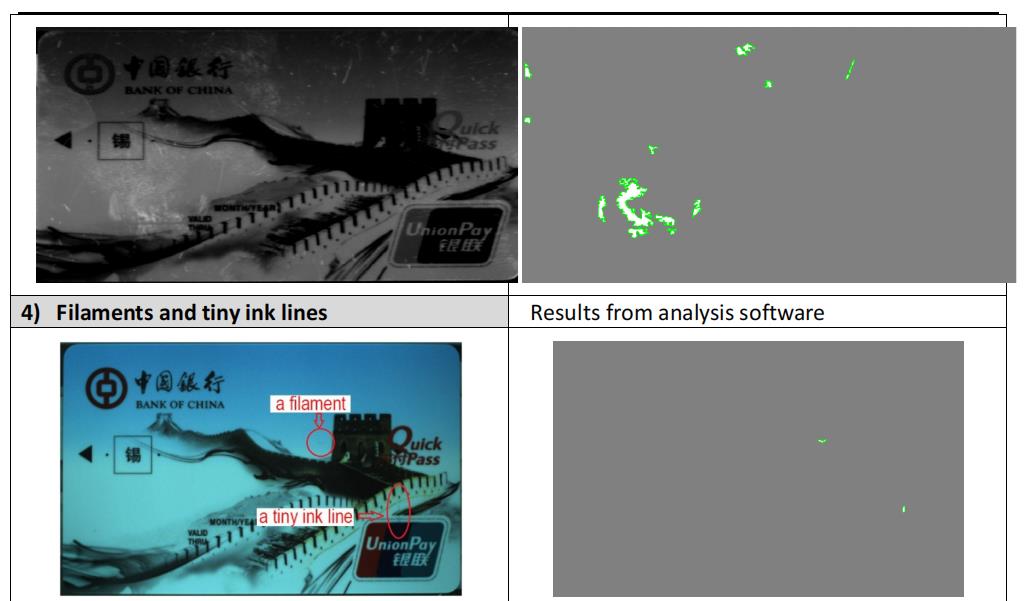
The test can be accomplished at once as a result of detecting the both sides concurrently with four cameras working online.
Working Flow
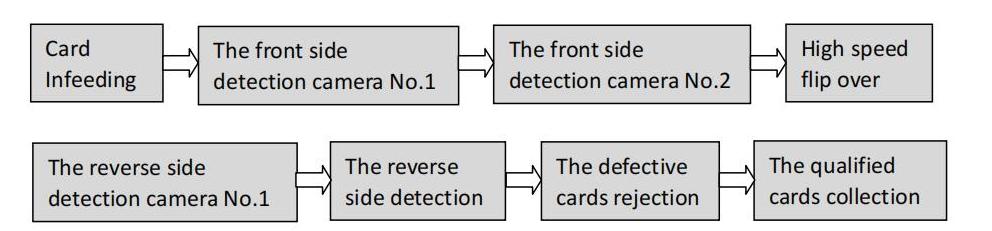
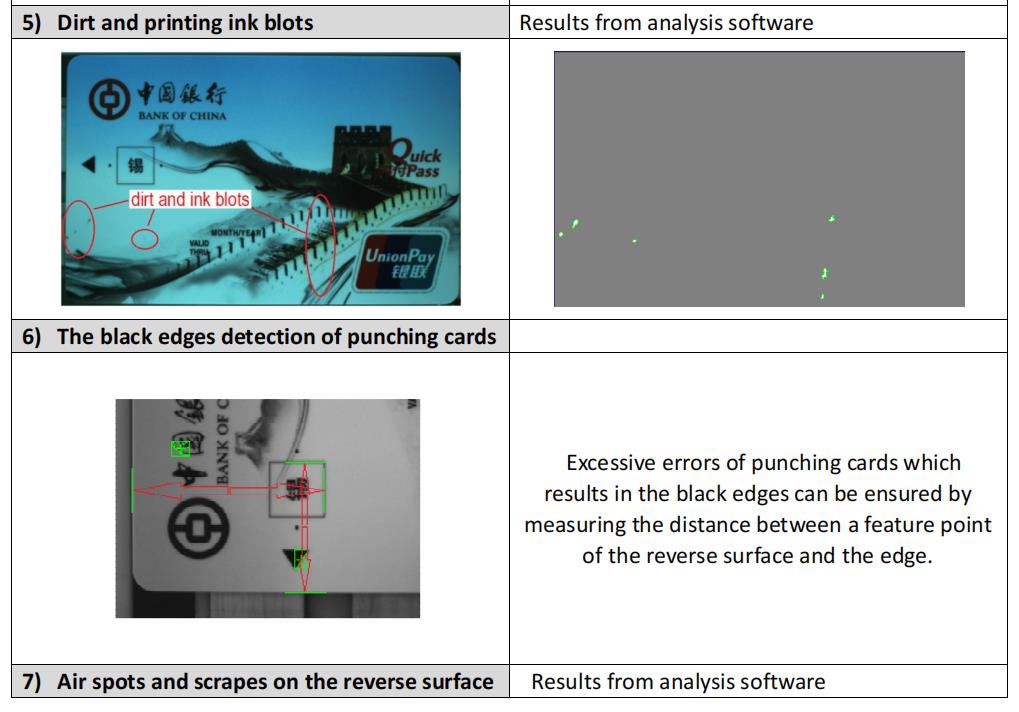
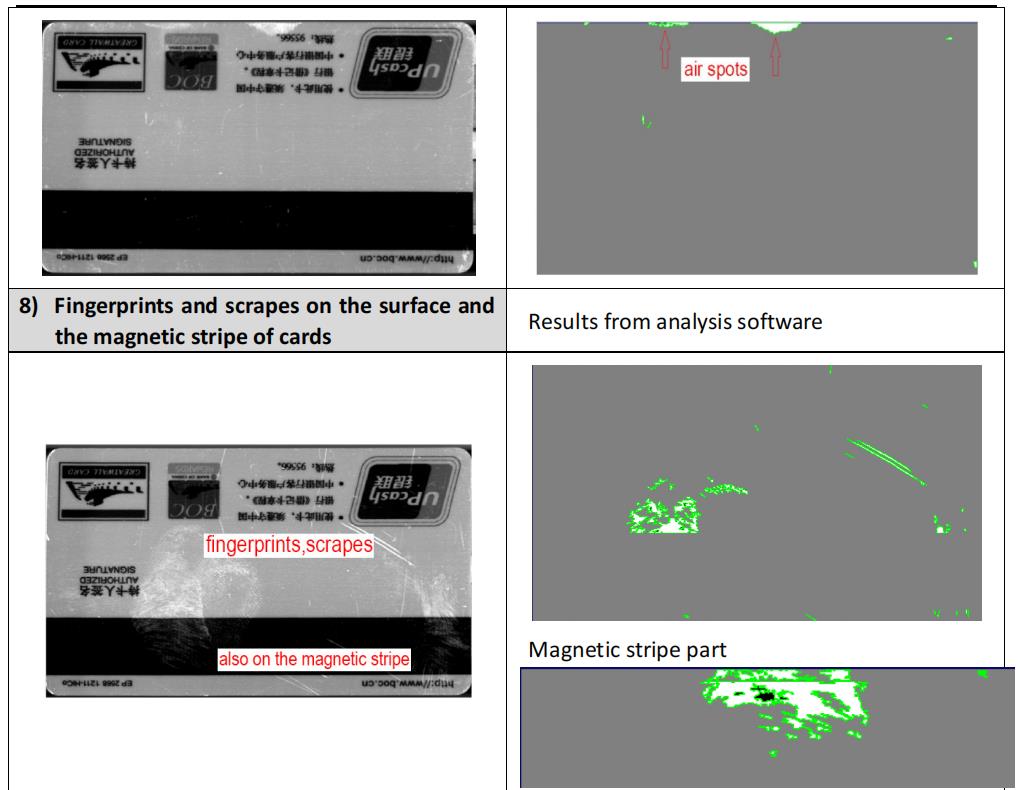
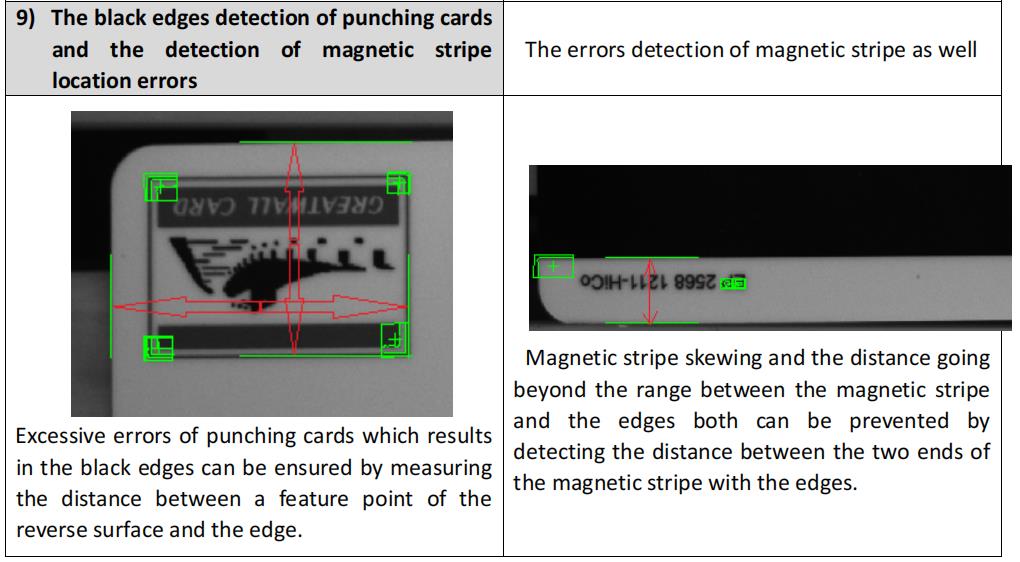
Defects can be detected: Surface scratching, laminated watermark, air spots, bubbles, gas blots, punching errors (black edges), unclear print, fringe, watermarks, etc.
Location of the card LOGO, Union Pay sign, VISA sign, magnetic stripe, signature panel, etc. And the detection of the external dimension.
Q1: What is the function of this machine?
A1: Performs automatic milling (slot cutting) and chip implanting in a single process, improving efficiency for smart card production.

Q2: What is the milling accuracy?
A2: ±0.05mm, ensuring precise slot dimensions for chip placement.

Q3: What is the output rate?
A3: 800–1,500 cards per hour (single-card processing).

Q4: Which card types are supported?
A4: PVC cards, smart cards, RFID cards, and NFC cards.

Q5: How reliable is the implanting process?
A5: Vision positioning and pressure control ensure a success rate of >99.5%.

Q6: Are tool changes frequent?
A6: Milling bits may need changing based on card thickness and chip size, but the process is quick and simple.

Q7: Does it have defect detection?
A7: Yes. Online inspection identifies milling and implanting errors automatically.

Q8: What is the noise level?
A8: Equipped with a soundproof enclosure; noise <70dB.

Q9: What are the power requirements?
A9: 5–8KW. Energy-efficient design.

Q10: What after-sales support is available?
A10: 1-year warranty, lifetime technical support, remote diagnostics, and on-site service.
Related PRODUCTS
-
Auto Patch Pick and Place Machine
-
Auto Sheet Trimming Machine - High-Preci
-
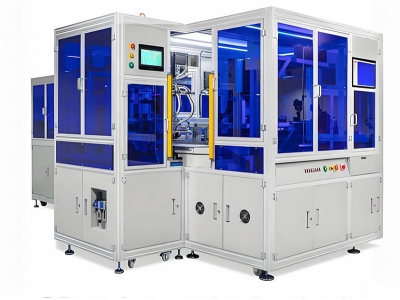
Auto Contactless Card Inlay Sheet Manufa
-
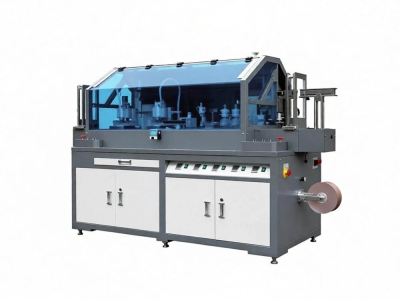
Automatic Milling & Implanting Machi
-
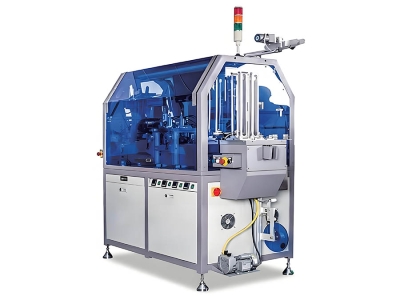
Automatic IC Module Implanting Machine
-
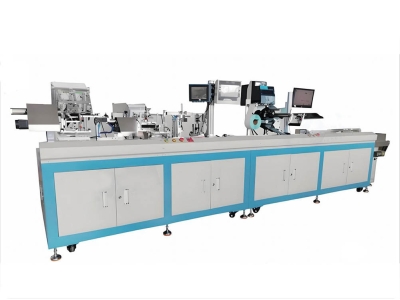
Auto Envelope Sealing and Labeling Machi
-
Automatic Module Testing Machine
-
Automatic 3D Curved Antenna Embedding Ma
-
Automatic Frequency Test Machine
-

Auto Wire Embedding Machine (2-in-1 Syst